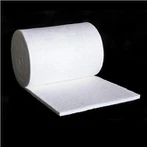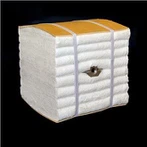


In the past, ceramic fiber modules were generally made of ceramic fiber blankets. The fibers of the blankets were short and thin, so the expansion of ceramic fiber modules was relatively stable. At present, most ceramic fiber modules are made of silk blankets, which have a relatively large tensile force. What is its moisture absorption performance?
1. The storage time in humid air will affect the moisture absorption rate of the ceramic fiber module. Mechanical indicators such as tensile strength, fatigue, bending fatigue strength, and abrasion resistance, which characterize the textile properties of fibers, are closely related to the moisture absorption rate of fibers. When the moisture absorption rate of the fiber exceeds the allowable range, the above-mentioned mechanical and electrical properties will be significantly reduced.
2. Although the water absorption capacity of the ceramic fiber module is very small, it is very important to control the relative humidity of the workshop due to its large specific surface area. The friction between fibers and other solid materials in textile processing will generate static electricity, which is more prominent than natural fibers and organic fibers.
3. Due to the equal repulsion of the static charge of the ceramic fiber module, the fibers in the yarn tend to be loose, and normal production cannot be carried out in severe cases. Therefore, the air usually maintains a certain relative humidity to eliminate static electricity. At the same time, an antistatic agent should be added to the mixture.