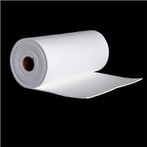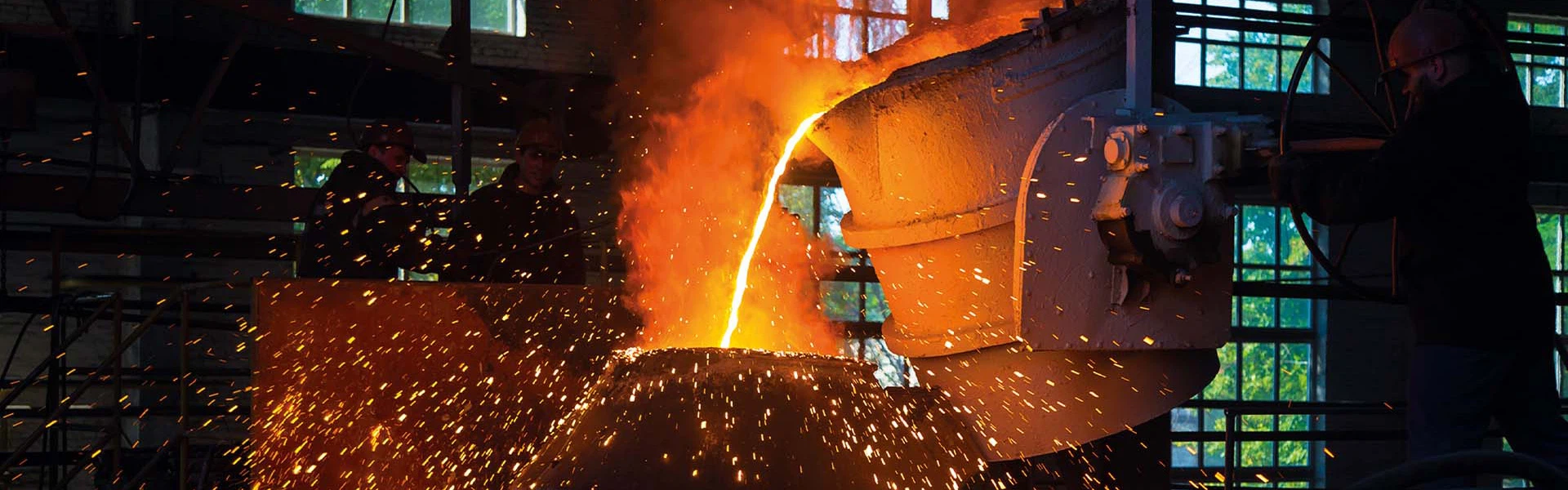


When raging flames surge within an industrial furnace and the thermometer needle approaches the four-digit mark, one can often stand calmly right next to the furnace's outer wall. This is not the work of a cooling system, but rather the result of a soft, blanket-like material-mere tens of millimeters thick-quietly bearing the brunt of the heat. Known as a ceramic fiber blanket, it appears fluffy and fragile, yet it acts as a thermal barrier that even extreme heat struggles to breach. How does such a lightweight, slender material block heat intense enough to melt steel? The answer lies in the intricate layout of the "microscopic city" within its structure.
A Counter-Intuitive Starting Point: Over 90% Air
Viewed under an electron microscope, one is astonished to find how little solid matter the blanket actually contains-more than 90% of its volume is filled with air. Conventional wisdom suggests that air, being highly mobile, is the antithesis of thermal insulation. However, the brilliance of the ceramic fiber blanket lies in its ability to "trap" air within countless isolated compartments, each smaller than the tip of a needle. These compartments are so tiny that hot air molecules cannot form any significant circulation currents; instead, they remain trapped in place, merely vibrating slightly. Consequently, air-normally an efficient carrier of heat-is transformed into a host of "stationary sentinels." Far from transferring heat, it becomes an impassable barrier against the flow of thermal energy.
The Solid-Phase Framework: A Carefully Engineered "Speed Bump"
Supporting this 90% void space is a network of ceramic fibers comprising less than 10% of the material's composition. Yet, these fibers do not follow a straight path; they are interwoven in a chaotic, random fashion, creating a complex three-dimensional maze. As heat attempts to conduct along the fibers, it is forced to navigate a crowded labyrinth-constantly turning, doubling back, and detouring-which extends the travel path manifold. Even more remarkable is the fact that the fibers connect only at minute "points" of contact, rather than bonding along continuous surface areas. It is akin to building a bridge by connecting match-heads end-to-end; every junction is extremely narrow, causing the flow of thermal vibrations to be abruptly severed, which makes solid-phase heat conduction exceptionally difficult.
Three lines of defense fail simultaneously: conduction, convection, and radiation are all thwarted
Conduction-stymied by the arduous journey through a solid-phase labyrinth and the bottlenecks created by point-like contact points;
Convection-trapped and fragmented by isolated micro-air pockets (comprising 90% of the structure), effectively halting macroscopic airflow;
Radiation-invisible yet impeded; as thermal rays pass through successive fiber interfaces, they undergo repeated refraction and absorption, causing energy to attenuate layer by layer.
Each of the three heat transfer mechanisms possesses its own formidable capabilities, yet all are rendered ineffective by the ceramic fiber blanket's "combined assault." Heat attempting to break out from the furnace chamber is dispersed, consumed, and detained along the way; by the time it finally reaches the outer wall, it has lost so much energy that it is barely perceptible.
Cold, hard figures proving "hot" performance
At an operating temperature of 400°C, the blanket's thermal conductivity is a mere 0.09 W/(m·K)-a figure far beyond the reach of traditional insulation materials. It is precisely this "cool" performance data that propelled the material from the laboratory to the industrial frontline, making it a standard lining for high-temperature equipment such as kilns, pipelines, and valves. It not only helps enterprises drastically reduce energy consumption but also fundamentally improves the comfort of the working environment.
The ceramic fiber blanket's prowess does not rely on some magical substance; rather, it stems from the meticulous engineering of its structure-using air to trap heat, fibers to delay heat transfer, and interfaces to dissipate heat. When the intense heat of a thousand-degree furnace exhausts all its energy within this microscopic labyrinth, only a gentle warmth remains on the outer wall. Perhaps this is the most captivating aspect of materials science: solving the most intractable problems with the most elegant, lightweight designs.