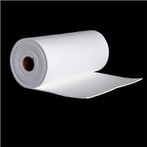


The main performance indicators of ceramic fiber refractory insulation materials mainly involve the highest operating temperature (℃), thermal conductivity (W/(m K), compressive strength (MPa), bulk density (kg/m3), flexural strength (MPa) Etc. Among them, various performance indicators are interrelated and affect each other, so when choosing ceramic fiber products, we must follow the principle of "energy saving and practicality", and effectively avoid behaviors that may touch the loss of refractory materials. Now let's learn how to give full play to the advantages of ceramic fibers to ensure the realization of the fire-resistant and thermal insulation effect of chemical equipment.
01 Maximum operating temperature
In the application of ceramic fibers in chemical equipment, the temperature environment of chemical equipment should be considered to ensure that the limit temperature of ceramic fiber products is lower than the normal temperature of chemical equipment in operation, and the deformation and aging of ceramic fibers at high temperatures should be prevented.
02 Thermal conductivity
Thermal conductivity reflects the thermal conductivity of ceramic fiber products and is also the main thermophysical property of ceramic fibers. When ceramic fibers are applied to chemical equipment, the thermal conductivity will occur due to changes in factors such as temperature and moisture content in chemical equipment. It is an important indicator for the equipment to achieve the thermal insulation effect.
03 Compressive strength
When chemical equipment uses ceramic fiber products, it is also necessary to ensure that the ceramic fiber products can withstand the corresponding pressure load of chemical equipment and maintain the structural stability of ceramic fibers.
04 Test weight
The bulk density is the weight per unit volume of the thermal insulation material that has been dried and is in a loose state at a temperature of 110°C. It has an optimal bulk density value, that is, under the optimal bulk density, it has a smaller thermal conductivity and better thermal insulation effect. In chemical equipment, sometimes in order to achieve the goal of energy saving and heat preservation, ceramic fiber products with suitable bulk density should be selected as far as possible.
05 Flexural strength
The flexural strength is the couple moment that the ceramic fiber can withstand per unit area when it is subjected to the bending load force in the working environment of the chemical equipment. Because of the characteristics brought by the ceramic fiber product itself, the product itself has the characteristics of high resilience and high strength, and has tear resistance before and after heating.