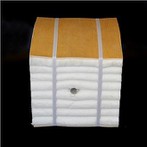


In recent years, as more and more refractory bricks and castable furnaces have been replaced by ceramic fiber module lightweight furnaces, the main reasons are as follows:
01
Lightweight and good thermal insulation performance
The ceramic fiber module is a lightweight refractory material with low thermal conductivity and high operating temperature (up to about 1300°C). Compared with the traditional furnace with high thermal conductivity and large heat loss, the thermal insulation effect of ceramic fiber is particularly excellent.
02
Good insulation effect
Insulation is the basic configuration of ceramic fiber modules, and fire resistance further improves the performance of ceramic fibers. According to statistics, the holding time of the ceramic fiber furnace is more than ten times that of the ordinary furnace, which is undoubtedly a boon for industrial furnaces.
03
Anti-cold and hot
The thermal stability of ceramic fiber is very strong, and the effect of resisting rapid cooling and rapid heating is particularly significant, which ensures the service life of the ceramic fiber furnace, which has obvious advantages compared with ordinary furnaces that are easy to explode or crack.
The effect of the ceramic fiber module is so good, will it force the traditional furnace to completely withdraw from the stage of history in the near future? The answer is not necessarily. Although there are various problems in the traditional refractory brick hearth or pouring hearth, the rationality of their own structure cannot be ignored. When in use, it is used in combination with the ceramic fiber module to complement each other, so that the furnace insulation effect is better.