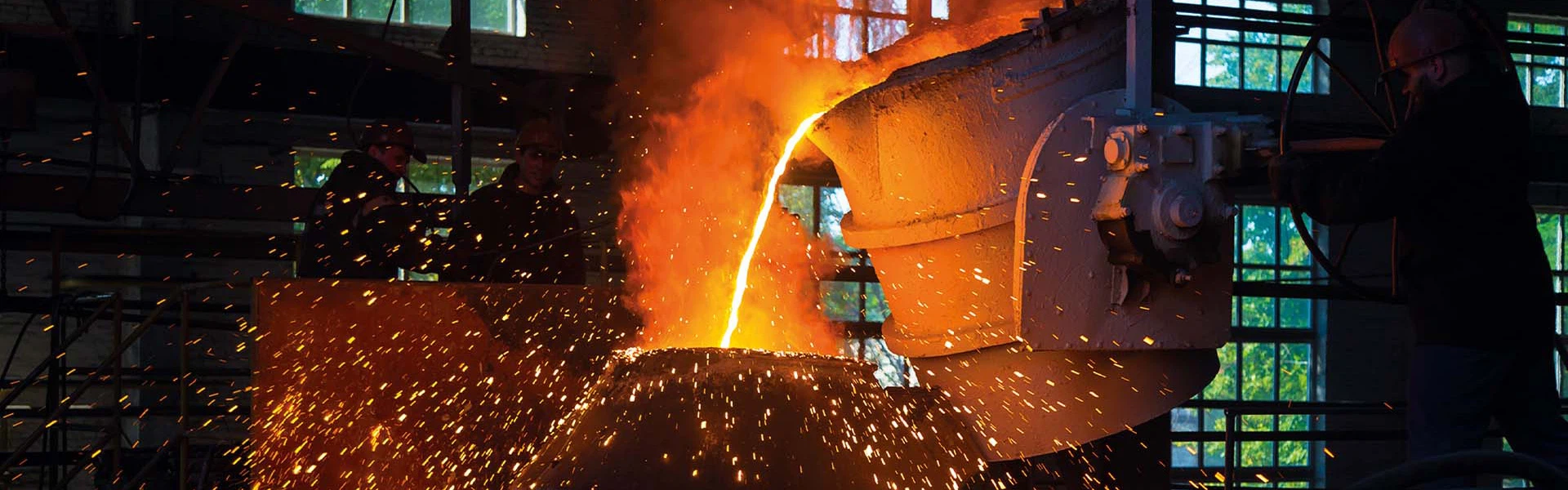


1. Smelting furnace protective layer: During the smelting process of non-ferrous metals, the smelting furnace needs to withstand extremely high temperatures and chemical erosion. Refractory materials can be used as a protective layer for smelting furnaces to resist high temperatures and chemical erosion, protect the furnace structure, and extend service life.
2. Molten metal flow channel: During the continuous casting and rolling process of non-ferrous metals, molten metal needs to flow through the flow channel. These flow channels require the use of refractory materials with excellent fire resistance to ensure smooth flow of molten metal and prevent clogging.
3. Continuous casting crystallizer: The crystallizer is an important component in the continuous casting process and needs to withstand high temperatures and erosion by molten metal. Refractory materials can be used as lining materials for the crystallizer, providing good thermal stability and wear resistance to ensure the quality of the slab and the continuity of production.
4. Furnace lining materials: Various furnaces are required during the smelting and processing of non-ferrous metals. The lining of these furnaces requires the use of refractory materials with excellent refractory properties to resist high temperatures and chemical attack and maintain the structural integrity of the furnace.
5. Flue gas treatment equipment: The flue gas generated during the smelting process of non-ferrous metals contains a large number of harmful substances and needs to be treated. Refractory materials can be used to manufacture various flue gas treatment equipment, such as chimneys, flues, etc., with good corrosion resistance and wear resistance, which can ensure the long-term stable operation of the equipment.