


(1) Continuous Release of Market Demand
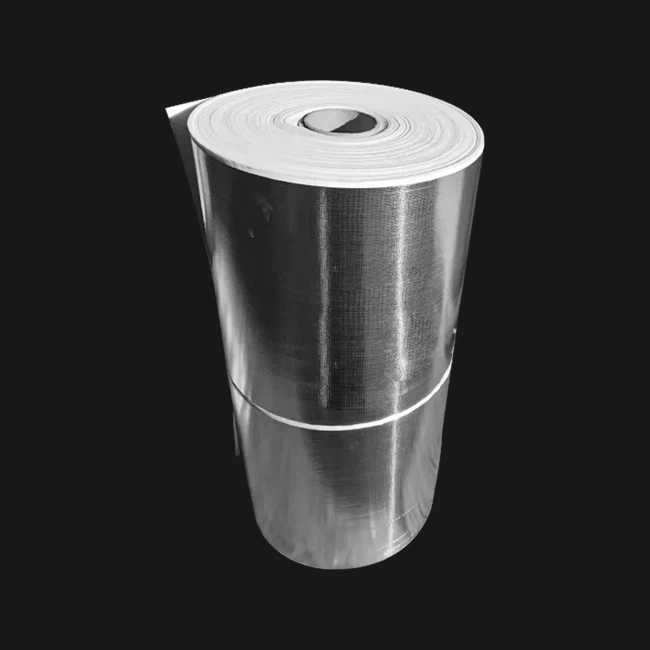
As global building energy efficiency standards continue to tighten and precision requirements in industrial manufacturing increase, traditional insulation materials are no longer sufficient for high-end applications. Aluminum foil fiber paper, with its core advantages such as excellent thermal insulation, moisture resistance, flame retardancy, lightweight flexibility, and superior heat reflectivity, is steadily increasing its market penetration.
Downstream application fields continue to expand. In the construction sector, it is widely used for exterior wall insulation, roof thermal insulation, and HVAC duct sealing, supporting compliance with green building standards. In petrochemical and power industries, it is mainly used for pipeline insulation and equipment thermal protection to reduce energy losses. In automotive manufacturing and electronics, the focus is on lightweight thermal protection solutions, particularly for new energy vehicles and precision electronic components requiring effective thermal management.
Furthermore, demand from specialized sectors such as cold chain logistics and aerospace is gradually emerging, further driving market expansion for aluminum foil fiber paper and broadening its global demand landscape.
(2) Technological Innovation Driving Industry Upgrading
Technological innovation has become the key engine for industry transformation and upgrading. In recent years, companies across the value chain have focused on process optimization and product iteration, achieving significant breakthroughs in several key technologies.
Advanced processes such as nano-coating modification, multi-layer gradient composites, and environmentally friendly adhesive applications have significantly improved high-temperature resistance, corrosion resistance, and mechanical strength, expanding the applicability of these materials in extreme environments. At the same time, the adoption of environmentally friendly raw materials and low-energy production processes has helped overcome environmental bottlenecks in manufacturing, aligning with global green manufacturing trends.
Meanwhile, the widespread adoption of intelligent manufacturing and automated production lines has enabled precise control over the entire process, from batching and laminating to slitting. This not only improves production efficiency and reduces manufacturing costs but also ensures product consistency and stability. These advancements are helping companies overcome international technical barriers and gain a stronger foothold in high-end markets.
Overall, the aluminum foil fiber paper industry stands at a critical stage of development, supported by strong market demand and empowered by continuous technological advancement. Looking ahead, as application scenarios continue to expand and environmental standards become increasingly stringent, the industry is expected to accelerate toward high-end, environmentally friendly, and intelligent development.
This evolution will help build a more competitive industrial ecosystem and provide higher-quality multifunctional thermal insulation and protection solutions for global energy-saving initiatives and advanced manufacturing sectors.


