

Overview of refractory brick properties
Refractory brick, also called fire brick, can withstand high temperature of 1580℃-1770℃.
Disadvantages of refractory brick lining:
Most of today's kiln processes require the furnace to heat up and cool down frequently, and the constant temperature change will cause the moisture in the refractory brick to evaporate, the refractory brick wall to shrink, and the furnace lining will settle, crack, or even break, resulting in poor thermal insulation performance and service life of the furnace. short. The furnace wall structure made of refractory bricks makes it difficult to repair the furnace. Refractory bricks are demolished and rebuilt, the construction period is long and the maintenance cost is high.
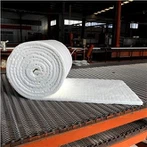
Overview of ceramic fiber modules:
The heat resistance of the ceramic fiber module is extremely stable. It can be used in the range of 1000-1500 °C. It is resistant to rapid cooling and rapid heating.
Features of ceramic fiber modules:
①Low thermal capacity, low thermal conductivity.
②Excellent thermal stability, tensile strength and chemical stability.
③Good thermal stability and thermal shock resistance.
④Noise reduction and sound absorption, uniform thickness, can be directly used for heat insulation in the kiln, easy to install and use.
According to the comprehensive comparison with refractory bricks, the ceramic fiber module insulation material stands out. It has a high safety factor and ideal comprehensive performance and construction performance. It can be made into suitable specifications and density for installation, and can also be sprayed with high-temperature paint on the surface to formulate an economical and reasonable thickness, high flexibility, and cost-effectiveness is better than that of the same performance materials.