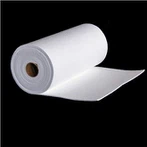


The refractory fiber component has good resilience after pre-compression, which effectively compensates for the thermal shrinkage of the refractory fiber, has good thermal insulation performance, good energy saving effect, convenient construction and maintenance, improves the construction quality and shortens the construction period. In the beginning, refractory ceramic fiber was only used as filling material and thermal insulation material, but now it can be used as a sealing material for the inner furnace cover of heat treatment furnaces and some other furnaces, and is used for water pipe wrapping, furnace roof and furnace wall lining in heating furnaces; It is used as the cover material and base sealing material of the bell annealing furnace in the heat treatment furnace, and also used in the furnace for high temperature operation.
The ceramic fiber module reduces the weight of the furnace in the use of the kiln, saves the building materials for the furnace, reduces the thickness of the furnace wall, reduces the investment cost, and has good thermal shock resistance and mechanical shock resistance, which ensures the service life of the kiln. The use of refractory fiber modules as the furnace lining can not only reduce the weight of the kiln body and the thermal expansion and contraction stress of the kiln body, but also improve its thermal insulation performance. The thermal conductivity is small, the thermal insulation effect is good, and the energy saving effect is good. The bulk density is small, the heat storage is low, and the heating and cooling speed of the furnace is fast, which effectively improves the heat utilization rate of the kiln.
For heat treatment equipment such as pit furnaces, trolley furnaces, and forging furnaces, the power-saving effect of chromium-containing ceramic fiber modules is outstanding. Mainly because of ultra-low thermal conductivity and better thermal insulation. On the one hand, the far-infrared radiation effect generated by the heating process of SiO2, Cr₂O₃, Fe₂O₃ and other components of the product itself can help to heat up quickly; on the other hand, the light reflection effect produced by ceramic fibers with small heat capacity can reduce heat loss. The two-pronged approach can shorten the heating time and lock the heat of the furnace, thus greatly improving the utilization rate of the equipment. In terms of construction, the ceramic fiber module is easy to install, quick to use, and does not require an oven, which saves the cost of building the furnace and shortens the production time. Compared with other refractory materials, ceramic fiber modules have lower cost, but higher benefits.