
Latest Products


Contact Us
- Zibo, Shandong, China
- suntherm@suindustry.com
- +86-533-6286577


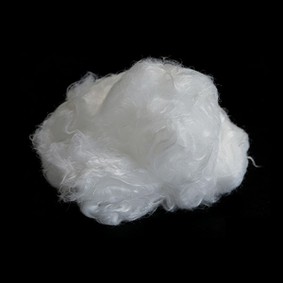
Polycrystalline Alumina Fibre Bulk
Polycrystalline alumina fiber is primarily composed of alumina and silica, and is manufactured using the globally advanced "sol-gel" technological process. Alumina fiber exhibits excellent flexibility and fire-resistant insulation properties, with all performance metrics meeting internationally leading standards.
Description
Product Introduction
Polycrystalline Alumina Bulk Fiber is produced by the internationally advanced sol–gel route. Its primary constituents are alumina (Al₂O₃) and silica (SiO₂). By precisely tailoring the sol chemistry and gelation kinetics, a highly uniform and stable polycrystalline microstructure is formed. Compared with conventional processes, sol–gel spinning delivers tighter fiber-diameter control, lower impurity levels, and superior high-temperature performance, endowing the bulk fiber with exceptional thermal stability, low thermal conductivity, and strong chemical inertness.
The material withstands continuous service at 1500 °C, exhibits minimal shrinkage, and resists thermal shock. Fibers are micron-scaled and interlaced with a fine, uniform pore network that blocks conductive and convective heat flow, markedly raising insulation efficiency. Flexible, high-tensile, and corrosion-resistant, the fiber is ideal for thermal insulation, sealing, and protection in aerospace, metallurgy, new-energy equipment, and high-temperature kilns, providing a key, high-end solution for energy savings and enhanced operational reliability.
Unique Advantages
Excellent High-Temperature Stability
Long-term service temperature up to 1500°C with even higher short-term tolerance; extremely low high-temperature shrinkage rate (typically <1.5%) and strong structural stability.
Outstanding Thermal Insulation Performance
Nano-scale polycrystalline fiber structure effectively suppresses heat conduction and convection; thermal conductivity is significantly lower than that of traditional ceramic fiber materials at high temperatures (20–30% lower at 1200°C).
Lightweight, Flexible, and Easy to Process
Combines flexibility with tensile strength, supports on-site processing such as cutting, folding, and sewing, and conforms well to complex equipment shapes.
Chemical and Thermal Shock Resistance
High-purity Al₂O₃-SiO₂ system provides excellent resistance to acid and alkali corrosion; low thermal expansion coefficient enables it to withstand severe thermal cycling (>1000°C/h) without cracking.
Safety and Environmental Compatibility
Free from asbestos and crystalline silica dust; complies with international health and safety certifications (e.g., EU 97/69/EC); no smoke emission at high temperatures.
Long Service Life and Cost-Effectiveness
High resistance to gas flow erosion; minimal powdering at high temperatures; high thickness retention rate over long-term use; integrated energy-saving effects reduce operational and maintenance costs.
Application
High-Temperature Industrial Furnaces
Lining for steel/non-ferrous metallurgy furnaces, ceramic sintering roller kilns, backing for glass melting tanks, insulation layers in petrochemical cracking furnaces.
New Energy and Advanced Manufacturing
Lithium battery sintering kilns, photovoltaic polysilicon ingot casting furnaces, high-temperature sealing for hydrogen electrolyzers, insulation for semiconductor diffusion furnaces.
Aerospace and Defense
Thermal insulation liners for rocket engines, thermal protection systems for spacecraft, insulation components for hypersonic aircraft.
Energy Efficiency Retrofitting and Sealing
Energy-saving upgrades for existing industrial furnaces (lining thickness reduction ≥30%), high-temperature pipe wrapping, flexible sealing for valve flanges.
Specialized Equipment Protection
High-temperature laboratory furnaces, single crystal growth furnaces, insulation for heat treatment fixtures, filling layers for firefighting high-temperature protective gear.
Product Parameter
|
Performance index of Polycrystalline Alumina Fibre |
||||||
|
Product Type |
Type 72-F |
Type 72-M |
Type 85 |
Type 95-M |
Type 95-N |
|
|
Chemical composition Al₂O₃ : SiO₂ (%) |
72-75:25-28 |
72-75:25-28 |
85-88:12-15 |
>95:<5 |
>95:<5 |
|
|
Mineral Structure |
δ-Al2O3 or γ-Al2O3 |
Mullite |
Mullite+α-Al2O3 |
γ-Al2O3 |
α-Al2O3 |
|
|
Classification Temperature (℃) |
1600 |
1600 |
1800 |
1600 |
1800 |
|
|
Molten Point(℃) |
>1800 |
>1800 |
>1800 |
>2000 |
>2000 |
|
|
Density(g/cm3) |
3.1 |
3.1 |
3.2 |
2.8 |
3.4 |
|
|
Average Fibre Diameter(μm) |
5.5-7.5 |
5.5-7.5 |
4-7 |
3-4 |
3-4 |
|
|
Shot Content(%) |
≥45μm |
0-2 |
0-2 |
0-2 |
0.2 |
0-2 |
|
Impurity(%) |
<0.5 |
<0.5 |
<0.5 |
<0.5 |
<0.5 |
|
|
Monofilament tensile strength (MPa) |
≥1200 |
≥1000 |
- |
- |
- |
|
|
Monofilament tensile modulus(GPa) |
≥100 |
≥100 |
- |
- |
- |
|
Product Certificate

Customer visits

Packaging Display

Related Products

FAQ
Q1: How do you ensure product quality control?
A1: SUNTHERM operates under a comprehensive quality management system that oversees every stage of production-from raw material composition to the final product's physical properties. All items undergo strict testing prior to shipment. We can also provide a quality inspection report along with the delivery upon request.
Q2: Are you a factory or a trading company?
A2: We are a factory. You are welcome to visit our facility anytime-I will personally guide you through our production lines.
Q3: What are the key differences between polycrystalline alumina fiber wool and ordinary ceramic fiber bulk?
A3: Material Structure: Polycrystalline alumina fiber wool has a continuous polycrystalline structure (with grain sizes at the nanoscale), whereas ordinary ceramic fibers are mostly amorphous or consist of microcrystalline glass phases.
Temperature Resistance: It can withstand long-term use at temperatures of 1500°C, which is over 200°C higher than ordinary ceramic fibers (typically ≤1260°C).
High-Temperature Stability: It exhibits a high-temperature shrinkage rate of <1.5% (compared to about 2–4% for ordinary ceramic fibers) and superior thermal shock resistance.
Q4: Does this material release harmful substances at high temperatures?
A4: Safety and Environmental Friendliness: It is made from high-purity raw materials (Al₂O₃ + SiO₂ ≥ 99%), contains no harmful components such as asbestos or crystalline silica dust, and complies with international certifications like the EU 97/69/EC.
No Volatiles at High Temperatures: It emits no smoke or odors at temperatures below 1500°C, making it suitable for high-cleanliness applications in sectors like semiconductors and new energy.
Hot Tags: polycrystalline alumina fibre bulk, China, suppliers, factory, customized, wholesale, price, free sample, Ceramic Fiber Composite Module, Flame Retardant Paper, high temperature Ceramic fiber composite module, Inorganic Ceramic Fiber Board, Insulated Fire retardant paper, polycrystalline Alumina fiber blanket
You Might Also Like


