
Latest Products


Contact Us
- Zibo, Shandong, China
- suntherm@suindustry.com
- +86-533-6286577


Alumina Fibre Needled Blanket
Alumina fiber needled blanket, made via sol-gel derived fibers and precision needling, features a dense Al₂O₃-SiO₂ structure with stable crystallinity. Its 3D fiber network ensures high delamination resistance, tensile strength, and surface smoothness. Ideal for extreme high-temperature environments, it delivers reliable thermal insulation and structural durability.
Description
Product Introduction
The Alumina Fiber Needled Blanket is a high-performance thermal insulation product that combines advanced materials science with textile manufacturing technology. Its core material consists of continuous alumina fibers produced via the sol-gel method, which ensures uniformity in composition and structural consistency at the nanoscale. Composed mainly of high-purity Al₂O₃ and SiO₂, the fibers undergo high-temperature treatment to form a stable crystalline structure that is dense and free of voids, offering excellent thermal stability and chemical inertness.
During production, the fibers undergo multiple stages of precise carding and layering before being reinforced using automated needling technology. This process creates a tightly interlocked three-dimensional network of fibers. The needling process not only significantly enhances the bonding strength between fibers-effectively preventing delamination and fiber shedding during use-but also substantially improves the material's overall mechanical properties, providing high tensile strength and resistance to tearing. After surface leveling treatment, the blanket exhibits a uniform texture and clean edges, facilitating further processing and installation.
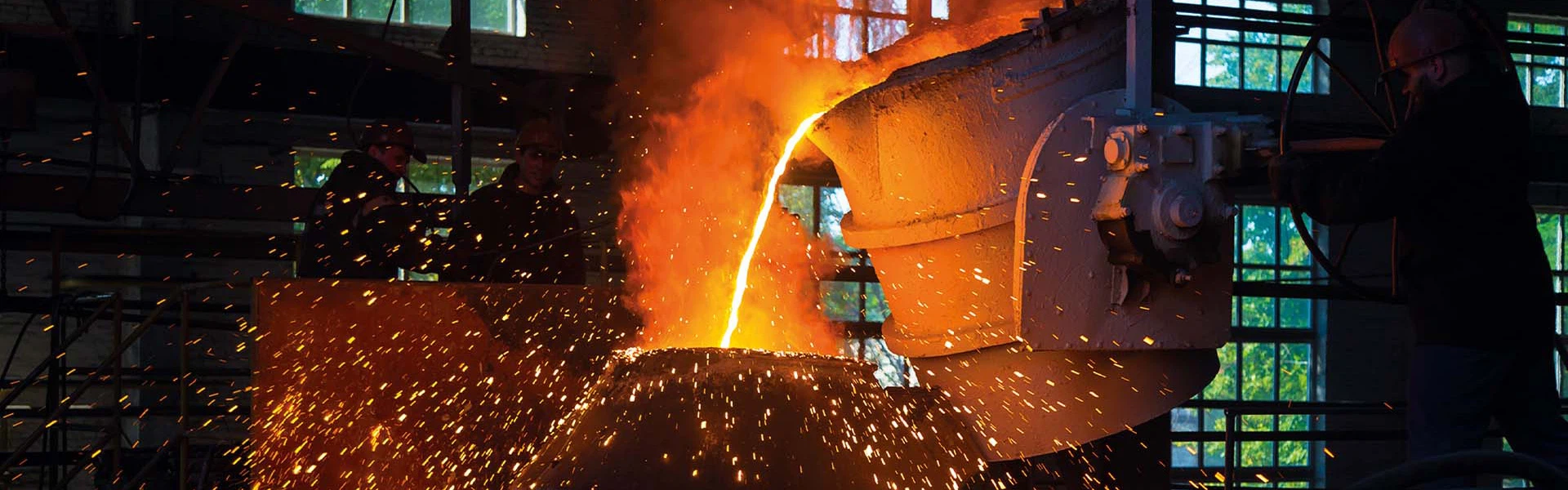
Under high-temperature conditions, the product demonstrates outstanding thermal insulation performance due to the inherently low thermal conductivity of alumina fibers and their stable crystalline structure. It can withstand prolonged use at temperatures of 1500°C, endure severe thermal cycling, and resist high-temperature gas flow erosion. This makes it suitable for extreme thermal environments in industries such as metallurgy, ceramics, aerospace, and chemical processing equipment. Additionally, the material offers excellent corrosion resistance and electrical insulation properties, maintaining structural integrity and functional stability under various complex operating conditions. It is an ideal solution for energy efficiency and safety protection in high-temperature industrial applications.
Product Features
1. Exceptional High-Temperature Performance
High-Temperature Resistance: Capable of long-term use at temperatures up to 1500°C, with even higher short-term tolerance and stable performance.
Low Thermal Conductivity: Fine fibers and a dense structure effectively block heat transfer, providing outstanding thermal insulation efficiency.
Excellent Thermal Shock Resistance: Low thermal expansion coefficient enables resistance to severe temperature fluctuations and thermal shocks without cracking or delamination.
2. Superior Mechanical and Structural Properties
High Strength and Delamination Resistance: Tightly interwoven fibers through 3D needling technology deliver excellent tensile strength, tear resistance, and structural integrity, minimizing delamination and fiber shedding.
Flexibility and Workability: The blanket is soft and can be easily cut, bent, and shaped to fit equipment contours, ensuring high adaptability and ease of installation.
Smooth Surface: The finished product boasts uniform flatness, facilitating subsequent coating or modular assembly.
3. Excellent Chemical Stability and Safety
Chemical Inertness: Composed of high-purity alumina and silica, it offers strong resistance to corrosion from most acids, alkalis, and molten metals.
Low Heat Capacity and Energy Efficiency: Low thermal capacity allows for rapid heating and cooling of furnaces, improving production efficiency and reducing energy consumption.
Environmentally Friendly and Non-Toxic: Free from hazardous materials such as asbestos and emits no harmful gases at high temperatures, complying with environmental and industrial safety standards.
4. Long Service Life and Cost-Effectiveness
Low Shrinkage Rate: Maintains dimensional stability under prolonged high temperatures with minimal shrinkage, ensuring lasting sealing and effectiveness of the insulation layer.
Resistance to Gas Erosion: The dense structure withstands erosion from high-temperature, high-speed gas flows, extending service life.
High Comprehensive Benefits: Exceptional durability and energy-saving performance effectively reduce maintenance costs and operational energy consumption, delivering significant long-term economic benefits.
Product Application
Industrial Furnaces:Car-bottom furnaces, roller-hearth kilns, graphitization-furnace linings and door seals
Petrochemical & Metallurgy: Ethylene-cracking furnaces, reformers, ladle lids, tundish backup linings
Aerospace: Spacecraft TPS layers, engine-bay insulation blankets, re-entry capsule cushioning pads
New Energy:Single-crystal furnace hot-zone insulation, fuel-cell stack insulation, nuclear reactor reflectors
Transportation: High-speed brake-disc heat shields, marine gas-turbine fire curtains, EV battery-pack fire-blocking felts
Product Parameter
|
Performance |
Test method |
72Type |
|||
|
Chemical structure Al2O3:SiO2(%) |
Chemical analysis |
72:28 |
|||
|
Mineral structure |
XRD |
δ-Al2O3 γ-Al2O3 Mullite |
|||
|
Classification temperature (℃) |
GB/T 3003-2017 |
1600 |
|||
|
Shot content (≥45 um) (% ) |
GB/T 5480-2017 |
0-2 |
|||
|
LOI(%) |
GB/T 32179-2015 |
0.1 |
|||
|
Specific gravity (g/cm3) |
GB/T 5071-2013 |
3.1 |
|||
|
Average fiber diameter(μm) |
GB/T 5480-2017 |
5.5-7.5 |
|||
|
Specific heat capacity (J/kg/K) |
GB/T 19466.4-2016 |
1.17x10³~1.21x10³ |
|||
|
Heat shrintage(%) |
1400℃ x 24h |
GB/T 17911 |
≤1 |
||
|
1600℃ x 24h |
≤1 |
||||
|
Thermal conductivity(W/m·k) |
600℃ |
GB/T 17911 |
B.D.=100kg/m3 0.067 0.129 0.170 |
B.D.=130kg/m3 0.078 0.148 0.213 |
B.D.=150kg/m3 0.091 0.172 0.266 |
|
1000℃ |
|||||
|
1200℃ |
|||||

Product Certificate

Customer visits

Packaging Display

Related Products

FAQ
Q1: What are the thermal insulation advantages compared to ceramic fiber blankets?
A1: In temperatures above 1200°C, it offers 20–30% lower thermal conductivity. Under the same working conditions, it can reduce insulation thickness by 30% or lower energy consumption by 20%, while also exhibiting minimal high‑temperature shrinkage.
Q2: Does it shed fibers or delaminate easily?
A2: No. The high needle‑punch density (≥10 punches/cm²) creates a three‑dimensionally interlocked structure, preventing fiber slippage. With a shear strength of ≥0.08 MPa, the blanket can be bent, cut, punched, or sewn without separation.
Q3: Is it harmful to humans during installation?
A3: It is safe. The product complies with EU 97/69/EC certification as non‑carcinogenic, and releases no smoke or odor at high temperatures. During installation, only standard dust‑proof masks are required, and it causes no skin irritation.
Hot Tags: alumina fibre needled blanket, China, suppliers, factory, customized, wholesale, price, free sample, High pure expanded graphite ceramic fibre paper, high temperature Ceramic fiber composite module, Inorganic Ceramic Fiber Board, Insulated Fire retardant paper, New Fiber Material, White Inorganic ceramic fiber board
You Might Also Like


