In the field of industrial furnaces, the performance of insulation materials is directly related to energy consumption, production efficiency, and equipment service life. In recent years, ceramic fiber modules, as a new type of refractory lining product, have gradually replaced traditional heavy refractory materials, promoting industrial furnaces toward a new era of lightweight design and high energy efficiency.
Material Characteristics and Structural Innovation
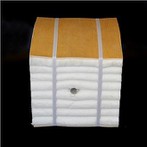
Ceramic fiber modules, also known as aluminum silicate fiber modules, are made from raw materials such as coal gangue or alumina through high-temperature electric melting and fiberizing processes, followed by folding and compression. Their core advantages lie in low thermal conductivity and low heat capacity.
Taking a module with a bulk density of 220 kg/m³ as an example, its thermal conductivity at 600°C is only 0.16–0.195 W/(m·K), which is significantly lower than that of traditional refractory bricks. Meanwhile, its weight is only one-tenth of heavy refractory materials and one-fifth of lightweight insulation bricks, greatly reducing the load requirements on the furnace steel structure.
More importantly, the modules are in a pre-compressed state during manufacturing. After installation and removal of the binding materials, the fiber blankets expand and press tightly against each other in different directions, forming a seamless integral furnace lining. This effectively compensates for fiber shrinkage at high temperatures and avoids cracking problems commonly found in traditional masonry structures.
Diverse Application Scenarios
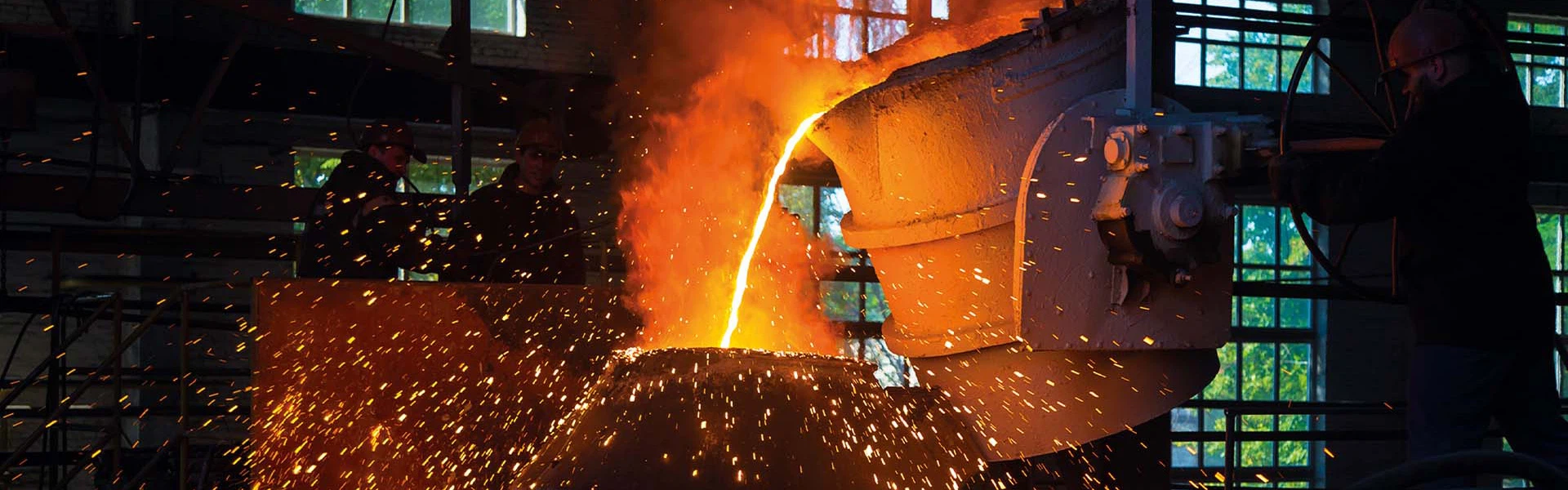
Ceramic fiber modules have been widely applied across multiple industrial sectors. In the petrochemical industry, they are commonly used for thermal insulation linings in cracking furnaces, reforming furnaces, and hydrogen production furnaces. In the metallurgical industry, various heating furnaces, soaking furnaces, and annealing furnaces have achieved significantly reduced wall temperatures and heat loss after modular upgrades. Typical applications are also found in tunnel kilns, shuttle kilns, and glass melting furnaces in the building materials industry.
Taking tunnel kilns in the brick and tile industry as an example, traditional kiln roofs made of T-shaped refractory bricks often suffer from poor resistance to rapid heating and cooling, cracking, detachment, and large temperature differences between the upper and lower sections. After adopting ceramic fiber module suspended ceilings, the kiln roof weight is reduced, thermal shock resistance is improved, and the service life can reach more than 10 years. At the same time, it effectively solves the problem of temperature differences affecting product quality.
Significant Energy-Saving Advantages
From the perspective of energy efficiency, furnace lining structures that combine ceramic fiber modules with fiber blankets can achieve energy savings of 30–40% compared with traditional refractory materials.
The mechanism behind this advantage includes:
The low thermal conductivity of fiber modules effectively confines heat within the furnace chamber.
Seamless installation between modules eliminates thermal short-circuiting.
Anchoring components are installed on the cold face of the lining, reducing material requirements for metal parts and avoiding thermal bridge effects.
A study using a cold-rolled strip steel annealing furnace as an example compared modular linings with layered fiber blanket linings. The results showed that the modular structure achieved lower furnace wall temperatures and better insulation performance, making it the preferred solution for furnace design and renovation.
Fast Installation and Convenient Maintenance
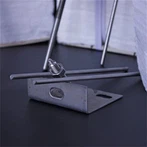
In terms of construction efficiency, ceramic fiber modules show clear advantages. They adopt standardized prefabrication and modular installation methods, with anchoring components directly fixed to the furnace shell steel plates.
Taking tunnel kiln roof construction as an example, a full-fiber structure can be completed in about eight days. After installation, no drying or curing is required, and the furnace can be put into operation immediately. When local lining damage occurs, only individual modules need to be replaced, resulting in low maintenance costs and fast repair speed.