

Centrifuge plays a key role in rock wool production line, and its main impacts are as follows:
1,Fiber formation
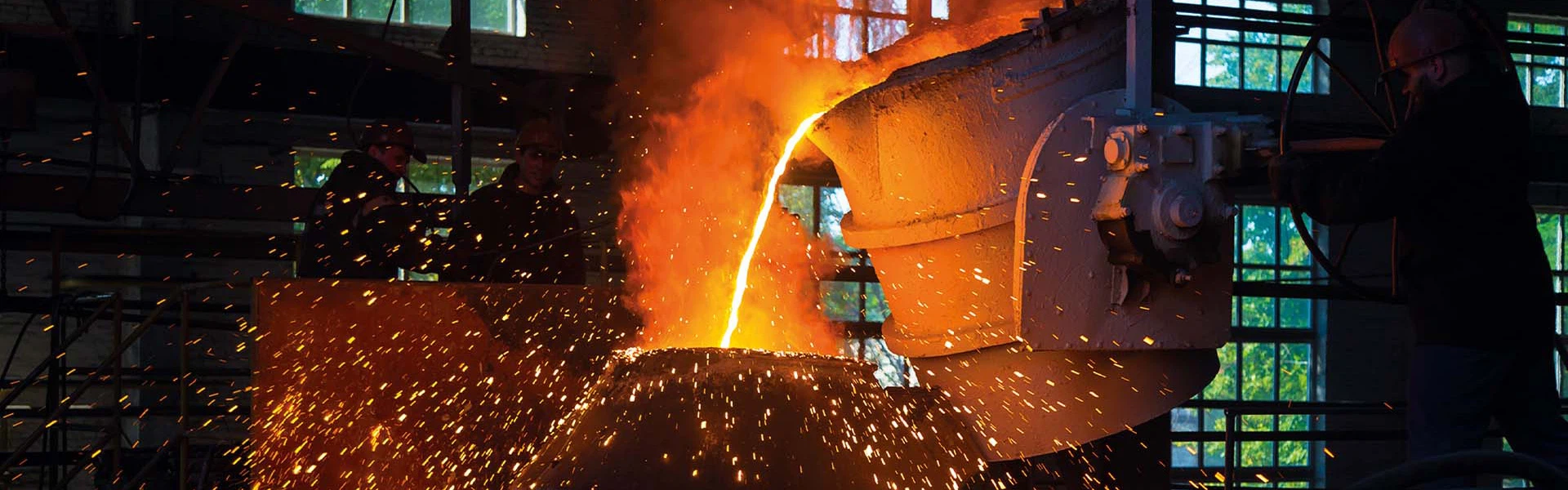
The centrifuge rotates molten rock at high speed and pulls it into fiber through centrifugal force, which is the core step of rock wool production.
2,Fiber quality
The centrifuge's rotation speed and operational stability directly determine fiber quality. A stable, appropriate speed ensures uniform fiber diameter (usually 3–8 μm), length (5–50 mm), and distribution. For instance, insufficient rotation speed results in thick, short fibers, while excessive speed may cause fibers to break or become too thin. Speed fluctuations (caused by unstable centrifuge operation) lead to uneven fiber thickness, creating "thick threads" or fiber gaps. These defects reduce rock wool's thermal insulation (due to uneven air pockets) and sound absorption (poor fiber interweaving) performance, and even weaken its mechanical strength.
3,Production efficiency
The centrifuge's performance dictates the overall production speed of the rock wool line. An efficient centrifuge can process more molten rock per unit time-for example, a high-performance model can produce 300–500 kg of fibers per hour. Since the centrifuge is the front-end core device, its speed directly coordinates with downstream equipment (e.g., fiber collectors and forming machines). A slow centrifuge causes downstream machines to idle, lowering the entire line's capacity; in contrast, a high-efficiency centrifuge matches faster downstream processes, shortening production cycles and increasing daily output by 10–20%.
4,Energy consumption
As the largest energy consumer in the production line, the centrifuge accounts for 25–35% of total energy use. It mainly consumes electricity to drive its high-speed motor and maintain stable high-temperature operation. An inefficient centrifuge (e.g., with outdated motors or poor heat insulation) wastes energy-for example, a low-efficiency model may use 15–20% more electricity per kg of fiber than an energy-saving one. This directly raises production costs: if electricity prices are $0.15/kWh, an inefficient centrifuge could increase annual energy costs by tens of thousands of dollars for a medium-sized rock wool factory.
5,Equipment maintenance
Operating at high temperatures and speeds, the centrifuge requires regular maintenance to avoid failures. Key tasks include inspecting and replacing worn bearings (high-speed rotation causes rapid bearing wear), cleaning residual molten slag (to prevent blockages that disrupt material flow), lubricating transmission components (ensuring stable rotation), and checking temperature control systems (preventing overheating damage). Neglecting maintenance may lead to serious issues: bearing wear can cause speed fluctuations (ruining fiber quality), while slag blockages may force production shutdowns.
6,Product diversity
Adjusting centrifuge parameters enables the production of rock wool with different specifications. For example, increasing rotation speed produces thinner fibers (for low-density rock wool used in building insulation), while reducing speed creates thicker fibers (for high-density rock wool used in industrial noise reduction). Adjusting the molten rock feed rate also changes fiber output, allowing the production of thin (5–10 mm) or thick (50–100 mm) rock wool boards. These adjustments help meet diverse demands from sectors like construction, automotive, and home appliances, expanding the product's market scope.

In summary, the centrifuge has an important impact on the fiber quality, production efficiency, energy consumption and product diversity of rock wool, and is a key equipment in the production line.