

Glass wool
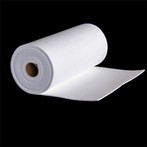
Glass wool, a prominent member of the glass fiber family, is a man-made inorganic fiber with distinct properties. Its main raw material is glass, which undergoes a process of melting and fibrillation to form a cotton-like material. Classified as a Class A fire-resistant material, it exhibits excellent fireproof performance, making it a reliable choice in environments where fire safety is paramount. One of its notable uses is in applications where the cold insulation effect is crucial. Thanks to its low thermal conductivity, it effectively slows down heat transfer, ensuring that cold environments are maintained with high efficiency. This makes it ideal for refrigeration systems, cold storage facilities, and pipelines that require consistent low temperatures. Beyond its thermal insulation capabilities, glass wool boasts good moldability, allowing it to be shaped into various forms to fit different installation requirements. It also has a low bulk density, which means it adds minimal weight to structures, and offers excellent sound-absorbing performance, contributing to noise reduction in buildings and industrial settings. Additionally, it is corrosion-resistant and chemically stable, ensuring long-term performance even in harsh environments.
Rock wool
Rock wool, another key inorganic fiber material, has its origins in Hawaii. It is primarily made from high-quality raw materials such as basalt and dolomite. The production process involves melting these raw materials at high temperatures and then using an internationally advanced four-axis centrifuge to centrifugally spin them into fibers at high speed. During this process, a certain amount of binder, dust-proof oil, and water-repellent agent are sprayed onto the fibers. The fibers are then collected by a cotton collector, processed using the pendulum method, and laid out in a three-dimensional manner for curing and cutting, resulting in rock wool products of different specifications and uses. Classified as Class A fire-resistant, rock wool finds extensive application in high-end engineering fields such as construction, shipbuilding, and petrochemical industries. Its ability to withstand high temperatures and provide reliable insulation makes it indispensable in these sectors where safety and performance are critical.

Mineral wool
Mineral wool refers to cotton-like short fibers made from silicate melts, which include slag wool, rock wool, glass wool, and ceramic fibers, among others. In China, however, the term generally refers only to the first two: slag wool and rock wool. The main raw material of mineral wool is slag, and like glass wool and rock wool, it is also a Class A fire-resistant material. A key use of mineral wool is as curtain wall filling insulation, where it provides effective thermal insulation and fire protection.

The difference between rock wool and slag wool. : metallurgical slag or fly ash as the main raw material called slag cotton; basalt and other rocks as the main raw material called "rock wool".
(1) Difference in water resistance
(2) Difference in heat resistance
(3) the difference in corrosion resistance
Glass wool belongs to a category of glass fiber, is a man-made inorganic fiber. Glass wool is the molten glass fibrillation, the formation of cotton-like material, the chemical composition of the glass class, is a kind of inorganic fiber . With good molding, low bulk density, thermal conductivity and go, thermal insulation, sound-absorbing performance, corrosion resistance, chemical stability.