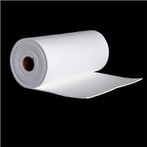


With the development of refractory fiber production technology and application technology, refractory ceramic fiber products have been serialized and functionalized, and the products can meet the use requirements of different temperature grades from the use of temperature. In terms of form, it has gradually formed from traditional cotton and blanket products to fiber modules, boards, special-shaped parts, paper, and fiber textiles; from fiber cotton to fiber spraying, plastics, casting materials and other forms of one-time processing or deep processing The products fully meet the requirements of different industrial furnaces in various industries for the use of refractory ceramic fiber products.
Refractory ceramic fiber material is a lightweight and efficient thermal insulation material. Compared with traditional thermal insulation materials, it has the following advantages:
01 Ceramic fiber as furnace lining has low bulk density
Ceramic fiber linings are more than 75% lighter than lightweight insulating brick linings, and 90% to 95% lighter than lightweight castable linings. If the fiber lining is used, the load of the steel structure of the kiln can be greatly reduced and the service life of the furnace body can be prolonged.
02 Ceramic fiber as furnace lining has low heat capacity (heat storage)
The heat capacity of ceramic fiber is only about 1/10 of that of light heat-resistant lining and light castable lining, and the heat capacity of furnace lining material is proportional to the weight of the furnace lining. Low heat capacity means that the kiln absorbs less heat during the reciprocating operation, and at the same time, the heating rate is accelerated, which greatly reduces the energy consumption in the furnace temperature operation control, especially for the start-up and shutdown of the heating furnace.
03 Ceramic fiber as furnace lining with low thermal conductivity
The thermal conductivity of the ceramic fiber lining is less than 0.1 W/m.k at an average temperature of 400°C, less than 0.15 W/m.k at an average of 600°C, and less than 0.25 W/m.k at an average of 1000°C, which is about 1/8 of the light clay brick. 1/10 of the lightweight heat-resistant lining, the thermal insulation effect is remarkable.
04 Simple construction of ceramic fiber as furnace lining
There is no need to leave expansion joints in the construction process, and the construction personnel can take up their posts after basic training, and the construction technical factors have little influence on the thermal insulation effect of the furnace lining.
The advantages of the comprehensive ceramic fiber lining structure can be seen: the ceramic fiber lining has become a trend in the development of the current furnace lining, which represents the level of the modernization development of industrial furnaces. Whether the ceramic fiber lining is adopted or not directly determines the use effect and product quality of the furnace.