
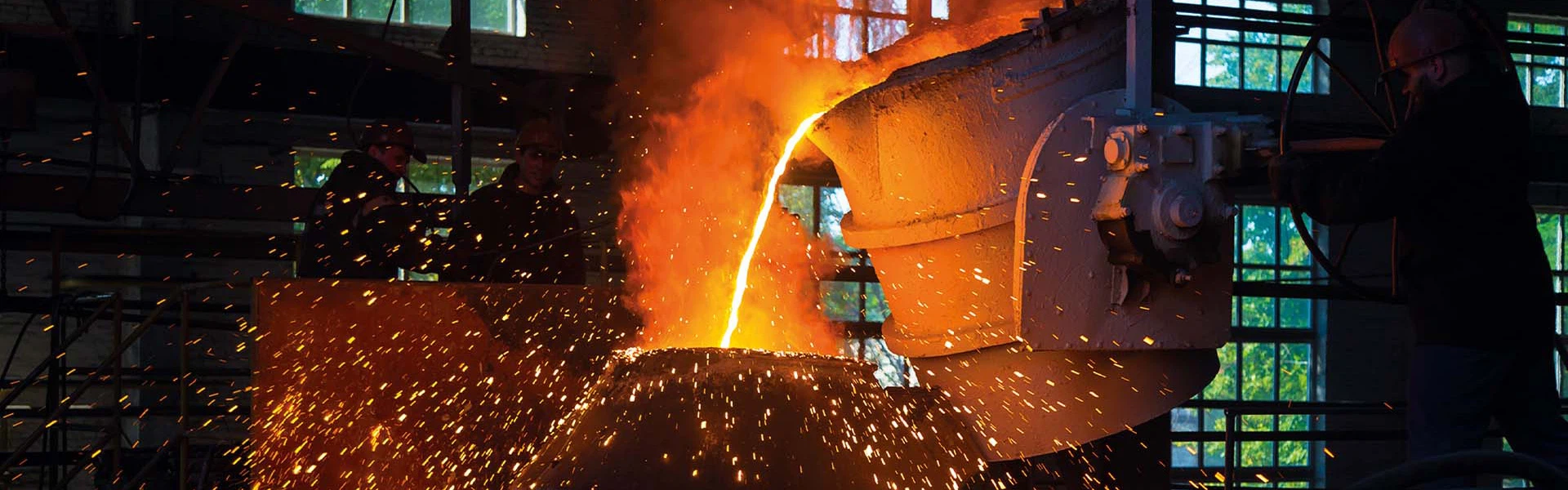
Inside industrial furnaces reaching temperatures of over one thousand degrees Celsius, a seemingly soft and fluffy fiber blanket can remarkably confine the intense heat within the furnace chamber while keeping the outer wall at a manageable temperature. This material, often referred to as the "king of insulation," is the ceramic fiber blanket. What kind of microscopic structure allows it to achieve such exceptional thermal insulation performance? Recently, from the perspective of thermal physics, we take a closer look at the science behind this "insulation mystery."
Impressive Performance: Thermal Conductivity as Low as 0.09 at 400 °C
In the field of thermal insulation materials, thermal conductivity is the key indicator of performance-the lower the value, the better the insulation effect. The performance of ceramic fiber blankets is remarkable: at 400 °C, their thermal conductivity is only 0.09 W/(m·K).
This figure means their ability to block heat transfer far exceeds that of traditional insulation materials. Thanks to this outstanding property, ceramic fiber blankets and their derivative products (such as ceramic fiber modules) have been rapidly adopted by the high-temperature furnace industry, with application results fully meeting or even exceeding expectations.
Dual-Phase Structure: The Synergy of Solid and Gas Phases
The insulation secret of ceramic fiber blankets lies in their unique microscopic structure. As a porous material, they mainly consist of two components: the solid phase (ceramic fibers) and the gas phase (air trapped in pores).
Like in any other material, heat transfer occurs through three mechanisms: conduction, radiation, and convection. The ingenuity of ceramic fiber blankets lies in their ability to suppress all three heat transfer pathways through careful microstructural design.
The "Detour Strategy" of the Solid-Phase Labyrinth
The solid phase-ceramic fibers-forms the structural framework of the material. However, instead of becoming "highways" for heat transfer, these fibers are deliberately structured to slow heat flow.
Random orientation, tortuous paths:
The fibers are randomly interwoven without any directional alignment, forming a three-dimensional labyrinth. When heat attempts to travel through the solid phase, it must follow a long and winding path, significantly reducing the efficiency of heat conduction.
Point contact, difficult heat transfer:
The fibers mainly contact each other at tiny points rather than large surface areas. Like bridges connected by fine needles, this structure makes heat transfer between solid phases extremely difficult.
The "Static Strategy" of the Gas-Phase Cage
The gas phase-air trapped in the voids between fibers-accounts for more than 90% of the material's porosity. This is another key factor behind the material's excellent insulation performance.
Air: a natural thermal insulator:
Most gases, including air, naturally have low thermal conductivity and low heat capacity when in a static state. Using air as an insulating medium is therefore an inherently effective strategy.
Microporous cages that immobilize airflow:
More importantly, these pores are not large interconnected spaces. Instead, the fibers divide them into countless tiny, relatively independent air pockets. When hot air attempts to move through the material, these micro-pores block and segment the airflow.
As a result, hot air molecules are trapped within these tiny enclosed spaces, unable to form large-scale movement and remaining nearly stationary. Consequently, heat transfer through gas-phase convection becomes extremely limited.
Triple Barriers: Suppressing Conduction, Convection, and Radiation
Through this sophisticated microstructural design, ceramic fiber blankets effectively suppress all three modes of heat transfer:
Conduction suppressed: Point contacts and tortuous fiber paths greatly hinder heat conduction.
Convection minimized: The 90% microporous structure divides and traps airflow, making convective heat transfer negligible.
Radiation reduced (not detailed above but significant): Multiple fiber interfaces and reflective properties help reduce the penetration of high-temperature thermal radiation.
Conclusion
The outstanding insulation performance of ceramic fiber blankets does not rely on a single mechanism but rather on the synergistic effect of the solid-phase labyrinth and the gas-phase cage. The solid phase slows heat through tortuous pathways, while the gas phase dissipates heat by immobilizing air. Together, they effectively block conduction, radiation, and convection.
It is precisely this sophisticated microscopic design that gives this lightweight, fluffy material the extraordinary ability to confine thousand-degree heat, making it an indispensable energy-saving guardian in modern high-temperature industries.


