Latest Products


Contact Us
- Zibo, Shandong, China
- suntherm@suindustry.com
- +86-533-6286577


Thermal Insulation Biosoluble Ceramic Fiber Blanket
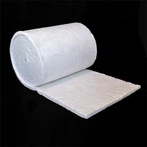
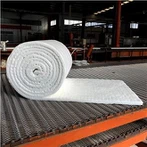
Thermal insulation bio soluble ceramic fiber blanket, white in color, regular in size, has both fire resistance, heat insulation and thermal insulation functions, and does not contain any binder.
Description
Product Introduction
The main components of thermal insulation biosoluble ceramic fiber blanket are SiO₂, MgO, CaO, etc.
Thermal insulation biosoluble ceramic fiber blanket is made of high-purity raw materials using a double-sided needle punching process. It has excellent thermal stability and can still maintain its original soft fiber structure at the highest continuous use temperature. It has high strength before and after heating. It does not contain any adhesives and lubricants, and does not release any smoke or odor when burned for the first time.
In addition to improving thermal performance, larger dust particles are also greatly reduced, making the product softer to the touch and less irritating when used.
In addition to thermal insulation biosoluble ceramic fiber blankets, we also provide soluble fiber cotton, soluble fiber boards, and a variety of customized soluble ceramic fiber shaped parts.
Features and Applications
Bio-soluble ceramic fiber blanket combines the advantages of fire resistance, heat preservation and thermal insulation, and has the following characteristics:
(1) No organic or inorganic binder;
(2) No carcinogens, biodegradable, in line with EU regulations;
(3) Excellent thermal insulation performance;
(4) Excellent electrical insulation performance;
(5) Excellent corrosion resistance;
(6) Low heat storage and low slag ball content;
Mainly used for civil ovens, high-temperature household stoves, boiler pipe insulation, chimney insulation, heat storage device insulation, ship fire protection, etc.
Technical Parameters
|
ITEM |
1100 BLANKET |
1300 BLANKET |
|||
|
Physical Index |
Classification Temperature(C°) |
1100 |
1300 |
||
|
Bulk Density (kg/m3) |
96 |
128 |
96 |
128 |
|
|
Heating line shrinkage (%) |
1000℃x24h≤1.5 |
1000℃x24h≤4 |
|||
|
Shot Content (%) |
≤12 |
≤12 |
|||
|
Tensile strength (thickness25mm)(MPA) |
≥0.045 |
=0.060 |
=0.050 |
=0.060 |
|
|
Fiber length (μm) |
3-5 |
3-5 |
|||
|
Chemical Component |
Si2O2 |
55-66 |
70-80 |
||
|
Cao |
23-35 |
18-25 |
|||
|
MgO |
4-7 |
00-4 |
|||
|
Thermal Conductivity |
200℃ |
0.065 |
0.049 |
- |
- |
|
400℃ |
0.098 |
0.087 |
0.11 |
0.10 |
|
|
600℃ |
0.212 |
0.191 |
0.21 |
0.20 |
|
|
Size(mm) |
Length:3600&7200&14640 Width:610&1220 Thickness:6-60 As customers' requirements |
||||
Product Certificate

The difference between soluble fiber blanket and ordinary ceramic fiber blanket
With the widespread application of high-temperature insulation materials in industrial and civil fields, ceramic fiber blanket has been widely recognized as a high-efficiency insulation material. However, the controversy over the environmental protection and health and safety of traditional ceramic fiber blankets has prompted the industry to begin to pay attention to a new type of material that is more environmentally friendly and safe-soluble fiber blanket. This article will systematically compare the differences between these two types of products in terms of raw material composition, biosafety, temperature resistance, and application range.
01 Fundamental difference in composition
Ordinary ceramic fiber blankets usually use aluminum oxide (Al₂O₃) and silicon oxide (SiO₂) as the main components. Some products add zirconium oxide (ZrO₂) and other components according to performance requirements to improve temperature resistance. Soluble fiber blankets adjust their chemical composition and increase the proportion of calcium oxide (CaO), magnesium oxide (MgO), **potassium oxide (K₂O) or sodium oxide (Na₂O)** to make them biosoluble in the human body fluid environment.
This change in composition makes the performance of the two significantly different, especially in terms of the impact on human health.
02 Biosolubility and Health and Environmental Protection
Ordinary ceramic fibers are easy to generate dust during construction due to their thin fibers and strong inhalability. After being inhaled into the lungs, they are difficult to degrade, posing potential health risks. Long-term contact may irritate the respiratory tract and even be listed as a possible carcinogen in some countries.
In contrast, soluble fiber blankets have significant biodegradability and can gradually dissolve and be excreted from the body in a simulated environment of human lung fluid without accumulation or carcinogenicity. This makes it meet the standards of "label-free materials" in EU Directive 97/69/EC and is widely used in places with high requirements for health and environmental protection, such as electronics, pharmaceuticals, food, laboratories, public buildings, etc.
03 Temperature resistance and service life
In terms of temperature resistance range, the operating temperature of ordinary ceramic fiber blankets is usually between 1050 and 1260°C, and some zirconium-containing products can withstand an instantaneous temperature of up to 1400°C, which is suitable for high-temperature and harsh environments such as steel, metallurgy, and petrochemicals.
The operating temperature of soluble fiber blankets is generally 1000-1200℃, and their stability under ultra-high temperature conditions is slightly inferior. However, for most medium and high temperature insulation needs, it is sufficient to meet them, and has greater advantages in environmental protection performance.
04 Differentiated development in application fields
Ordinary ceramic fiber blankets are widely used in industrial kiln linings, heat treatment furnace insulation, ladle linings, thermal power equipment and other fields due to their excellent fire resistance and mechanical strength. They are suitable for harsh environments and extremely high temperature conditions.
Soluble fiber blankets are more suitable for equipment insulation, air conditioning pipe insulation, thermal insulation of high clean spaces, fireproof sealing and other occasions where personnel frequently contact, and are especially favored by high-end markets in Europe and the United States.
05 Mechanical properties and construction experience
The two have similar performances in strength and flexibility. Both use acupuncture to enhance the structural stability of the blanket body and have good tensile strength and flexibility. Soluble fiber blankets have softer fibers, less dust, safer and more friendly construction, and long-term use will not cause skin or respiratory discomfort.
As environmental regulations continue to tighten and people's health awareness increases, soluble fiber blankets, as a new type of high-temperature insulation material, have achieved a better balance between environmental protection, safety and functionality. Ordinary ceramic fiber blankets still occupy an important position in ultra-high temperature industrial applications. In the future, the two will develop in coordination based on different application needs. For users who pursue environmental protection and human safety, soluble ceramic fiber blankets are undoubtedly a more ideal choice.

Customer Visits

Packaging Display

Related Products

FAQ
Q1: Does your company accept customization?
A1: We have our own factory and excellent technical team, and accept OEM service.
Q2: Do you need to provide samples?
A2: Yes, we can provide customers with stock samples.
Q3: What payment methods do you usually use?
A3: Payment method: Pay a deposit of 30%-50% after the order is confirmed, and the balance will be paid before shipment after the goods are ready; or letter of credit, small payments can use Western Union. PayPal can also be used.
Hot Tags: thermal insulation biosoluble ceramic fiber blanket, China, suppliers, factory, customized, wholesale, price, free sample, Bio Soluble Fiber Bulk, Bio Soluble Fiber Textile, Bio Soluble Fiber Wool, Bio Soluble Insulation Blanket, Heat resisting bio soluble fiber textile, Thermal insulation Bio soluble fiber blown bulk
You Might Also Like