
Latest Products


Contact Us
- Zibo, Shandong, China
- suntherm@suindustry.com
- +86-533-6286577


Polycrystalline Alumina Needle-Punched Fiber Blanket
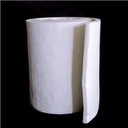
Polycrystalline Alumina Needle-Punched Fiber Blanket is produced via sol-gel and advanced needle-punching processes. This results in excellent tensile strength, thermal stability up to 1600°C, chemical resistance, low thermal conductivity and shrinkage, and high dimensional stability, making it ideal for demanding high-temperature applications.
Description
Product Description:
Polycrystalline Alumina Needle-Punched Fiber Blanket is produced from polycrystalline alumina fibers, which are synthesized through a sol-gel method and further processed using an advanced needling technique. Composed primarily of alumina and silica, these fibers possess a dense internal structure and stable crystalline phases. The needling process substantially improves fiber entanglement, resulting in a blanket that exhibits remarkable tensile strength, excellent high-temperature thermal stability, strong chemical corrosion resistance, low thermal shrinkage, low thermal conductivity, and minimal slag ball content. Capable of withstanding long-term service temperatures of up to 1600°C, the product offers outstanding dimensional stability and superior thermal insulation performance under extreme high-temperature conditions, making it well-suited for prolonged use in demanding applications.
Product Features:
Excellent high-temperature resistance and thermal stability
Low heat accumulation, low thermal conductivity, and minimal slag ball content
Outstanding tensile strength and thermal-state strength
Superior corrosion resistance, particularly to alkali metals
Good resistance to delamination and high surface smoothness
High thermal reflectivity
Product Applications:
Refractory and thermal insulation linings for industrial kilns and furnaces
High-temperature insulation equipment and pipelines
High-temperature sealing gaskets
High-temperature filtration media
Substrate material for automotive three-way catalytic converters
Aerogel thermal insulation composites
Raw material for modules and folded blocks
Product Technical Parameters:
|
Item |
Test Standard |
ALWOOL-72 |
|||
|
Chemical Composition Al₂O₃:SiO₂(%) |
Chemical Analysis |
72:28 |
|||
|
Mineral Structure |
XRD |
δ−Al₂O₃ /γ−Al₂O₃ /Mullite |
|||
|
Classification Temperature (°C) |
GB/T 3003-2017 |
1600 |
|||
|
Shot Content(≥45um)(%) |
GB/T 5480-2017 |
0-2 |
|||
|
Loss on Ignition (%) |
GB/T 32179-2015 |
0.1 |
|||
|
Fiber Density (g/cm³) |
GB/T 5071-2013 |
3.1 |
|||
|
Average Fiber Diameter (μm) |
GB/T 5480-2017 |
5.5-7.5 |
|||
|
Specific Heat Capacity (J/kg·K) |
GB/T 19466.4-2016 |
1.17×10³-1.21×10³ |
|||
|
Linear Shrinkage (%) |
1400°C×24h |
GB/T 17911 |
≤1 |
||
|
1600°C×24h |
≤1 |
||||
|
Thermal Conductivity (W/m·K) |
600°C |
GB/T 17911 |
B.D.=96kg/m³ 0.079 0.150 0.215 |
B.D.=128kg/m³ 0.082 0.152 0.210 |
B.D.=150kg/m³ 0.070 0.118 0.160 |
|
1000°C |
|||||
|
1200°C |
|||||
|
Tensile Strength (kPa) |
GB/T 17911 |
B.D.=96kg/m3 ≥50 |
B.D.=128kg/m3 ≥70 |
B.D.=150kg/m3 ≥95 |
|
Product Specifications:
|
Thickness (mm) |
Bulk Density (kg/m³) |
Width (mm) |
Length (m) |
||
|
96 |
128 |
150 |
|||
|
3mm |
√ |
- |
- |
610/1220 |
7.2/14.4 |
|
6/7.5/10/12.5mm |
√ |
√ |
√ |
610/1220 |
7.2/14.4 |
|
20mm |
√ |
√ |
- |
610/1220 |
3.6/7.2 |
|
25mm |
√ |
√ |
- |
610/1220 |
3.6/7.2 |
|
Width can be customized: 610 mm – 1500 mm |
|||||
|
Note: Specifications can be tailored according to customer requirements. |
|||||

Installation Guidelines for Polycrystalline Alumina Fiber Needle-Punched Blankets
As a high-performance refractory and thermal insulation material, the installation process of polycrystalline alumina fiber needle-punched blankets directly affects their performance and service life. The following are key installation precautions, divided into three stages: pre-installation preparation, installation process, and post-installation inspection.
I. Pre-Installation Preparation
Material Inspection
Confirm that the blanket model, thickness, density, and dimensions meet design requirements.
Check the blanket for integrity, ensuring no damage, moisture, or contamination.
Surface Treatment
The installation substrate (e.g., furnace shell, piping) must be clean, dry, and flat, free of rust, oil, dust, etc.
For metal surfaces, it is recommended to apply a layer of high-temperature anti-rust paint or adhesive.
Tool Preparation
Tools: Utility knife, steel ruler, tape measure, rolling tool, adhesive (e.g., specialized high-temperature glue), and application tools.
Safety Gear: Wear protective masks, gloves, and long-sleeved clothing to prevent skin and respiratory irritation from fiber dust.
Environmental Requirements
Installation is recommended in a dry, well-ventilated environment. Avoid working on rainy or humid days.
II. Installation Process
Cutting and Joining
Cut according to actual dimensions, leaving a slight excess (approx. 5–10 mm) to fill gaps.
Blankets should be tightly joined without leaving direct gaps. Use a staggered joint method (e.g., bricklaying pattern) with an overlap width of at least 50 mm.
High-temperature adhesive can be applied to seams, or loose fiber fill can be used to fill gaps.
Fixing Methods
Adhesive Fixing: Apply high-temperature adhesive (e.g., aluminum phosphate glue) evenly to the substrate, then press and smooth the blanket into place.
Mechanical Fixing: For vertical or overhead surfaces, use high-temperature anchors (e.g., ceramic buttons, stainless steel bolts) with a recommended spacing of 200–300 mm.
Avoid over-stretching or compressing the blanket; maintain its natural loft to ensure optimal insulation performance.
Multi-Layer Installation
For multiple layers, stagger the seams between layers (minimum 100 mm offset) to prevent thermal bridging.
Seams should not align across layers.
Irregular Surface Handling
For irregular areas such as pipes, elbows, and valves, cut the blanket into segments or use pre-formed components.
For complex areas, fill with loose fiber first, then wrap with the blanket to ensure no exposed gaps.
III. Post-Installation Inspection
Visual Inspection
Check that the surface is smooth, without bulges or cracks, and that seams are tight.
Ensure anchors or adhesive are secure and not loose.
Gap Inspection
Focus on checking corners, openings, and seams for leaks, using a flashlight if necessary.
Cleaning and Protection
Clean residual fiber debris from the installation site to prevent dust accumulation.
Apply a high-temperature surface coating (e.g., aluminum foil, protective paint) to enhance resistance to airflow erosion and reduce fiber shedding.
Special Safety Notes
Health Protection: Always wear professional protective masks (e.g., N95/P2 grade) and gloves during operation. Wash skin and clothing promptly after installation.
Initial Heating: After installation, implement a gradual heating (dry-out) process. The initial heating rate should be ≤10°C per hour to prevent rapid moisture evaporation and blanket cracking.
Avoid Stepping: Minimize direct stepping on the blanket during installation and subsequent maintenance. Use temporary boards if necessary.
Product Certificates:
SUNTHERM has passed a variety of industry certification tests, such as CE, SGS, ASTM, ISO9001-2000, SASO, ROHS, BV, MSDS and so on.

Customer visits:

Packaging Display:
SUNTHERM boasts a professional team with vast experience in tailoring packaging solutions for diverse products across various industries.

Related Products:

FAQ:
Q1: Are you a manufacturer or a trading company?
A1: We are a direct manufacturer, established in 1993 and based in Shandong, China. This allows us to not only provide high-quality products at competitive prices but also offer comprehensive pre-sales support and reliable after-sales service.
Q2: Do you offer free samples?
A2: Yes, free samples are available for evaluation upon request.
Q3: What is your Minimum Order Quantity (MOQ)?
A3: We do not have a strict MOQ policy. We are flexible and welcome orders of any size for various project needs. The final price will be quoted based on the specific order quantity.
Q4: How do you ensure product quality and consistency?
A4: Quality is managed at every stage through our in-house ISO-certified quality control system, from raw material inspection to final product testing. We ensure every batch meets our stringent standards and your specifications.
Q5: What are your standard payment terms?
A5: Our standard terms are a 30-50% deposit via T/T to confirm the order, with the balance paid before shipment. We also accept other methods such as L/C, PayPal, or Western Union for smaller amounts.
Q6: What is your typical production lead time?
A6: The lead time depends on the product complexity and order volume. Generally, production takes 7-15 working days after order confirmation and deposit receipt. A precise schedule will be provided once we review your detailed requirements.
Hot Tags: polycrystalline alumina needle-punched fiber blanket, China, suppliers, factory, customized, wholesale, price, free sample, Ceramic Fiber Composite Module, Flame Retardant Paper, high temperature Ceramic fiber composite module, New Fiber Material, polycrystalline Alumina fiber blanket, White Inorganic ceramic fiber board
You Might Also Like


